Organizing the building blocks of AI
Turning scattered media into searchable timelines.
Organizing huge folders of images, GIFs, and videos usually turns into a massive headache. Teams spend hours manually tagging files just to find them later, and building sequences takes switching between three different applications.
AI Library saw this exact problem. They wanted a central hub where visuals organize themselves. LogicLeaps stepped in to build it — a platform that uses AI to automatically tag media, extract video frames, and let users build exported timelines without leaving their browser.
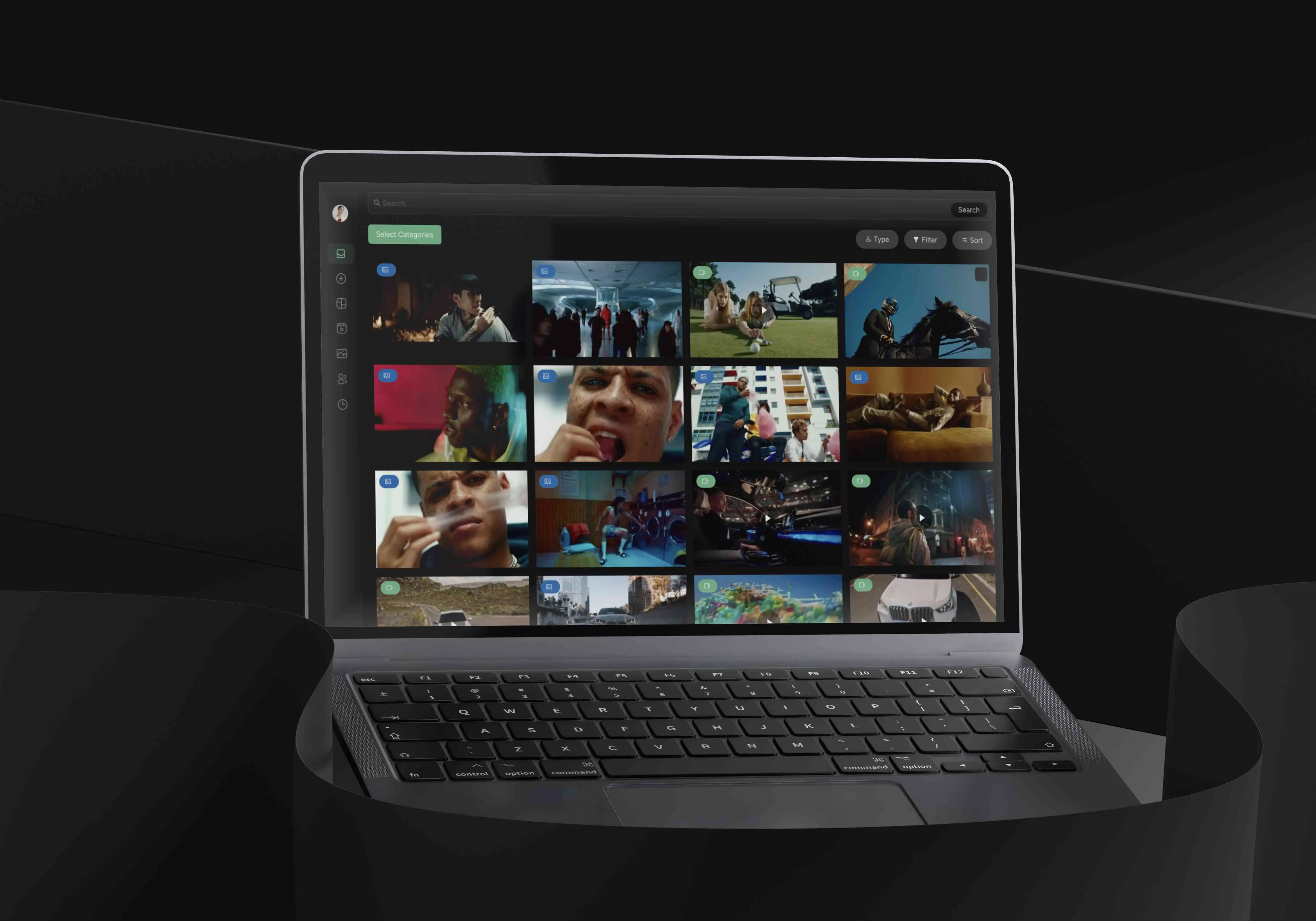
Store and organize unlimited images, GIFs, and videos in a single library.
Semantic search finds the exact asset instantly, no manual tagging required.
Arrange clips and images into a sequence and export directly as MP4 or GIF.
Type what you're looking for and find the exact asset instantly.
Every video frame is scanned and tagged as its own searchable asset.
Folder structures and crew list tagging keep massive libraries organized.
Every asset lives on secure, scalable cloud infrastructure.
Bridges the gap between storing files and actually building something with them.
Challenges
The manual tagging trap
Three problems stood between AI Library and the platform they envisioned. Here's what we had to solve.
The manual tagging trap
When you have thousands of visuals, finding that one specific video clip or image feels impossible without a strict naming system. Manual tagging is incredibly slow and nobody wants to do it. The project needed a way to instantly identify what was inside every uploaded file.
Naming conventions also break down the moment more than one person is uploading files. What one editor called "beach_shot_final" meant nothing to the next person searching for it six months later.
Trapped video frames
Usually, if you want a specific frame from a video, you have to open editing software, scrub through the timeline, and export it manually. Users needed a way to pull out specific frames automatically and treat them as standalone searchable assets.
A single hour of footage could hold the exact shot someone needed, buried somewhere in the timeline with no way to search for it. That frame was effectively invisible until someone was willing to scrub through the whole clip to find it.
Disconnected workflows
Most asset managers just store files. If a user wanted to combine three GIFs and a video clip into a new sequence, they had to download everything and use another tool. AI Library needed to bridge the gap between storing files and actually creating something with them.
Storage and creation living in separate tools meant every project started with a round trip of downloads and re-uploads. AI Library needed the library itself to double as the workspace where new sequences actually got built.
Solutions
Here's what we built
AI powered visual analysis
Hooked up to AWS Rekognition. When a user drops a file in, the system scans it and generates accurate tags for objects, scenes, and even specific crew members — searchable instantly through a semantic search bar.
Automated frame extraction
A system that breaks videos down into individual frames right in the platform. Each frame gets scanned and tagged on its own, so users can search for a specific moment and pull that exact frame into a new project folder.
In-browser timeline creation
Users can select different images, GIFs, and video clips, arrange them in order, and export the entire sequence as a brand new MP4 or GIF — no clunky video editing software required.
Results
From messy folders to an intelligent library
LogicLeaps took AI Library from a concept to a live product. Content creators and teams can now upload massive batches of files and trust the platform to organize, tag, and make them instantly searchable.
Got a product idea worth protecting?
Whether it's visual asset management or an entirely different industry, we build platforms that turn messy files into searchable systems.